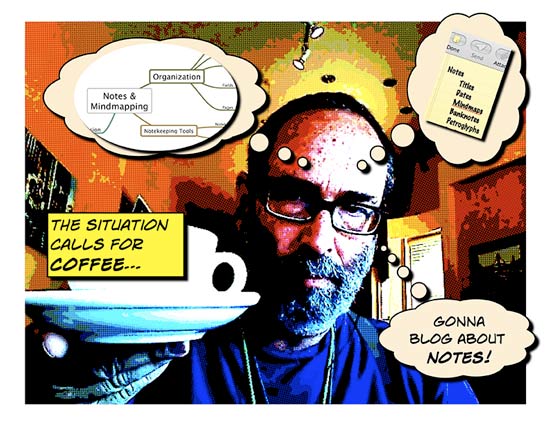
This is a weird time of year. Here in Berkeley it's a gorgeous day, sunny, though chilly. The magnolias are already blooming. It's not spring yet, not even winter. The looming New Year makes a guy think about transitions, the passage of time, new stuff—the usual. The numeral 2005 sounds new—shiny and pristine, just out of the box, wheareas 2004 sounds (already), old, scratched, a little battered, like my camera cellphone (which I bought in 2004). This blog is one of the transitions for the new year. I've started it This is a weird time of year. Here in Berkeley it's a gorgeous day, sunny, though chilly. The magnolias are already blooming. It's not spring yet, not even winter. The looming New Year makes a guy think about transitions, the passage of time, new stuff—the usual. The numeral 2005 sounds new—shiny and pristine, just out of the box, wheareas 2004 sounds (already), old, scratched, a little battered, like my camera cellphone (which I bought in 2004). This blog is one This is a weird time of year. Here in Berkeley it's a gorgeous day, sunny, though chilly. The magnolias are already blooming. It's not spring yet, not even winter. The looming New Year makes a guy think about transitions, the passage of time, new stuff—the usual. The numeral 2005 sounds new—shiny and pristine, just out of the box, wheareas 2004 sounds (already), old, scratched, a little battered, like my camera This is a weird time of year. Here in Berkeley it's a gorgeous day, sunny, though chilly. The magnolias are already blooming. It's not spring yet, not even winter. The looming New Year makes a guy think about transitions, the passage of time, new stuff—the usual. The numeral 2005 sounds new—shiny and pristine, just out of the box, wheareas 2004
[Tsatskes]
![]()
Twitterverse
Coffee
Popular
Coffee Websites
![]()
Cafes by Zip
Code
Coffee Podcasts
43 Folders
Anders Fagerjord
Bay Area Bloggers
Berkeley Blogs
Blue Bottle Clown College
Cafexperiment
Coffeegeek
Denver Coffeehouses
Dogmilque
Doug Miller
Emily Chang's eHub
Hewn & Hammered
Jill's Definition of Weblog
Jonas Luster
Laughing Squid
Le Blaugue à Beleg
Loïc Le Meur Blog
Mark Bernstein
Moleskinerie
Seesmic Blog
Tant Mieux
The Dynamist
Tonx Dot Org
Send Me Email:
coffeeblogger (at) doublesquids.com
"The meaning of life and other trivia." Copyright ©2004, 2005, 2006, 2007, 2008 Jonathan David Leavitt. All rights reserved.
Every page now has Seesmic/Disqus video commenting. Scroll to the bottom to see or post video comments. There are also Haloscan comments at the end of each separate blogpost article. To read a text-only version of Jonathan's Coffeeblog on your iPhone or other mobile phone, click here. Or to see the graphics with less text, click here.
Go: [ Home | Previous | Archive | Gods & Myths | Cafes | Coffee | Nations & Empires | People | Arts ]
[ Words | New Media | Cinema | Gastronomy | Productivity | Yiddish ]
Rants and Raspberries: Video Commenting
Captain Video and the Video Rangers. Remember them? If you do, you were a kid when I was, back in the 1950's. In those days there was an American company called Dumont, who manufactured a television set of the same name, and started a TV network. One of their shows, broadcast live in what would become the early prime-time slot, was a science fiction/adventure serial named after the good captain and his sidekick. A full hour of the program has been salvaged, and can be seen here on YouTube. But cowboys? Yes, there were cowboys in the show, because reruns of Westerns could be used for filler. Advertisements were frequent, long, venal, and aimed at children. The captain and his Ranger dressed in military-style uniforms and flew a spaceship resembling a propeller-driven World War Two aircraft. But that was not important; what was, besides the ads, was the video. The captain, most recordings of the show, Dumont televisions, and the Dumont network are long gone (they passed into oblivion in 1955), but their legacy is more prevalent than ever on today's Internet: the advertisements, of course, and the video.
Today is a good time to celebrate the memory of Captain Video because a new use for video has just emerged over the past few days, and today Jonathan's Coffeeblog will add the feature: video commenting. On blogs. Commenting itself has been a bone of contention, because it is vulnerable to spamming, trolling, and ranting. Some bloggers resist a comments feature. Others open commenting to registered readers, then close registration to new commenters. Most blogs that do accept comments have a system built in to moderate comments, filtering out unwanted communications. Now that video commenting has become available, someone will still have to moderate the comments, but instead of mere text, tone of voice, facial expressions, sounds, motion, and visual props can now be part of the commenting process.
In the days of Captain Video, the closest imaginable thing to video commenting would have been a letter to the local newspaper editor. Now video commenting is available, and, I predict, will soon be widely used throughout the Internet.
Video commenting is now possible due to a collaboration between two Internet start-ups. One is the web commenting service, Disqus, founded in 2007 by Daniel Ha and Jason Yan. The other is Seesmic, the brainchild of Loïc Le Meur, a powerhouse entrepreneur who helped pioneer blogging and political podcasting in France, after a start in advertising and web hosting. Seesmic, which one might call a video version of Twitter, the social microblogging hub, makes it easy to record short videos as a means of conversation. Now a Seesmic video, using the Disqus commenting apparatus, can be attached as a comment to a weblog item.
The science fiction film, 2001: A Space Odyssey, featured a realistic-appearing conversation between a space station officer and his child. Since then that kind of two-way videophone talk has been available for a while over Apple's iChat, the Skype Internet phone service, and other systems. (I just talked with my mother this morning over Skype.) She and I agree, being able to see someone's face makes a big difference.
What is special about the new Seesmic/Disqus collaboration is that two-way video, blogging, and mainstream media online magazines and "blogs" are getting closer to being fully integrated. Now, instead of writing a letter to the editor of one the dwindling number of local newspapers, you can make a few mouse clicks and give the guy the raspberry.
More Links: Disqus Seesmic VideoCommenting
More Images: Video Seesmic Twitter
Permanent Link to This Entry | | | Technorati Tag: SeesmicSend a message to Jonathan: coffeeblogger (at) doublesquids (dot) com
Bacn
Poor Hormel. That's the meat-packing company that invented the canned luncheon meat in the late 1930's whose brand name has become iconic: Spam. I googled Spam and found out all kinds of cool stuff. For example, there is a kind of spam sushi, called spam musubi, popular in Hawaii. Then there is Spam Spread, which is reportedly halal, which means kosher for Muslims. Who knew? Spam, of course, is the internet nickname for unsolicited, unwanted, and deservedly deprecated email concerning strategies for enlarging the membrum virilis, keeping said membra viriles in a state of precoital readiness, and, for those who are unconcerned about the state of their membrum virilis, or have no such membrum, mortgages. Oh, yes, and get-rich-quick schemes out of Nigeria. But I digress. Why? Because I am not intending to write about Spam here. I am writing about bacn.
Bacn? Yup. The omitted "o" distinguishes it from the salty and delicious pork product that goes famously with eggs. Pancetta, they call it in Italy. And Canadians produce "Canadian bacon," although it's not the same thing. (Do Canadians just call Canadian bacon "bacon" and refer to the Anglo-American kind as "Anglo-American bacon?" An interesting question, but yet another digression, because the subject here is not bacon but bacn.)
The bacn concept emerged in October, 2007 in Pittsburgh, Pennsylvania, at a geek meet called PodCamp Pittsburgh 08. Bacn was defined concisely: email you want -- but not right now.
Wow. There's all that bacn on my computer , and I never even knew what it is called. I just checked my inbox and I have 295 unread messages. Bacn. I have already read the messages I wanted to read. Will I ever read the bacn? Will I ever delete it or transfer it to another folder? I don't know. But I could use Mac Mail's smart mailbox feature to store bacn in a bacn folder. If I wanted to. Do I? I don't know.
Bacn, of course, is merely a subset of a topic that's very hot on the Internet right now: information overload. The very fact that bacn is wanted, but its reading is to be deferred, puts it solidly in the overload category. I've written about information overload, as have many others. Furthermore (that's a grammatically correct way of beginning a sentence with the conjuction "and") I am increasing the information overload by the very act of writing this blogpost. One must never forget, however, that one man's noise is another man's signal. Or, as one might say, one man's spam is another man's bacn.
More Links: Spam InformationOverload Bacn PodCampPittsburgh
More Images: Bacon Musubi PodCampPittsburgh Pancetta
Permanent Link to This Entry | | | Technorati Tag: BacnSend a message to Jonathan: coffeeblogger (at) doublesquids (dot) com
Nations and Empires
I've added a new category to the Coffeeblog: Nations and Empires. Originally I had thought of adding a "history" category. Then I realized that everything I post to the Coffeeblog is some kind of history: the history of Bettie Page and the Kefauver Commission, or the history of Andres Serrano and his "Piss Christ" image with the resulting kerfuffle. Even a movie review is a history of sorts. Thinking it over, I realized that the kind of history that has begun to interest me lately is the history of empires and the nations, peoples, tribes, ethnic groups, language groups, and other societal entities engulfed, absorbed, or instrumental in the development of such empires. I would have never predicted such an interest as a college freshman who felt overwhelmed by the huge reading assignments of my required basic history course. But back then there was no hypertext, Internet, or Wikipedia. Why such a powerful interest now, so late in life? It has to do with the world events swirling around us about which the dead tree media and the idiot box generally keep us in abysmal ignorance. Why do Shia and Sunni Muslims attack each other in Mesopotamia (the dead tree pundits call it Iraq)? There are reasons for it. "Civil war" the treekillers call it. Sort of like Antietam or the Battle of Bull Run? Please. And then there's Central Asia, the route of the Silk Road, where the focus is not silk any more but petroleum., land of many fallen empires. To paraphrase George Santayana, "Those who cannot remember the past are condemned to write for CNN."
Like most Coffeeblog topics, "Nations and Empires" turned out to be much more complex and hard to pin down than I expected. I found that the best starting point was the idea of empire itself. It comes from the Romans and their Latin word imperare, which simply means "to command." It's a military term. Commanding officer and all that. From imperare came imperium, which the was the legal concept of the power to command, vested not only in officers but in magistrates. The Romans, unlike the founding fathers of the USA, did not advocate separation of powers. Roman politicians served simulatenously as magistrates (judges), Senators, and military commanders. They had the imperium. The Romans used the same word to describe their empire: Imperium Romanum. The power derived, in principle, from the Senate and the people: Senatus Populusque Romanus (SPQR). In the 1960's, I saw manhole covers in Rome with SPQR on them.
Because Roman law codified the principles of empire, the Roman empire (east as well as west) is a good example to study, and that includes Roman imperium during the years of the republic before the first Emperor, Augustus Caesar. But Rome was by no means the first. Rome inherited (hijacked might be a more accurate term) the empires of Carthage and Alexander the Great, who in turn took over that of the Persians, who had taken over the kingdoms of the Egyptian Pharaohs. The Persian Empire (actually a series of empires) might be the best prototype of an empire to study, but for the fact that languages in which its history have been recorded are less accessible in Western translation than the Greek and Roman histories, if they were written at all. Along the Silk Road and to the north and south have been empires that are forgotten (Khitans, anyone?) and others which some want to forget (the Huns and Mongols).
OK. So what? A point I want to make is that we are still coming off the nineteenth-century political pipe-dream high of nationalism and nation-states. In their purest forms, nation-states are not multicultural, and by definition, not multinational. Empires are both. That's the difference. Nation-states sometimes engage in ethnic cleansing to stay pure. A nasty habit. But what is a nation? The question has always been easier to ask than to answer. The word nation also comes from Latin, and it means a birth. The birth of a nation, perhaps? (That was a 1915 movie honoring the Ku Klux Klan, by the way.) Presumably a nation consist of people born sharing a common heritage, meaning language and culture. Nations, however, are almost never homogeneous, like homogenized milk, and they are never static. They change. The idea of a nation is better understood by using the word for nation in Greek: ethnos. Yup. An ethnic group. And there is a Hebrew word for nation, goi, often used Biblically in the plural, goyim, "the nations." When the Bible was translated into Greek, goyim was translated as the plural of ethnos. As many know now, goyim in Yiddish means people who are not Jewish, in other words, the "other nations," and I have read that ta ethne, the Greek plural, has been used to mean non-Greeks, the barbarians, and among Christians, the opponents of Jesus.
So, my friends, perhaps nations are not all good and empires are not all bad. As Rodney King asked, "Can we all get along?" Excellent question. And I would add to it, "Can we all get along without empires? And if not, which empires?"
More Links: RomanEmpire PersianEmpire AlexanderTheGreat Ethnic
More Images: RomanEmpire PersianEmpire Empire Imperial
Permanent Link to This Entry | | | Technorati Tag: EmpireSend a message to Jonathan: coffeeblogger (at) doublesquids (dot) com
Denixonizing China
Recently when the Olympic Torch passed through San Francisco, city officials engaged in well-intended skulduggery when they extinguished the original torch and successfully routed a second torch in another part of town. On the announced route, fans, onlookers, and angry demonstrators on both sides of the "Free Tibet" issue had gathered to show their enthusiasm and outrage. It turned out that the rerouting subterfuge prevented violence, but I was struck by the era-defining implications of this event, and other demonstrations which had begin on March 10 in China's Tibet Autonomous Region and soon after had become internationalized. I decided to write something about this in the Coffeeblog, and this is it. The more I learn about Tibet, however, the more complex the issue appears. Read on.
As an old-timer, I remember the days when the People's Republic of China was generally viewed as a international bad guy or villain in most of the American press and the general American consciousness. Then, in 1972, President Nixon visited China and met with Mao Zedong, the legendary Communist leader. Since then, with some notable exceptions, China's reputation has become generally favorable in the USA, as a manufacturing titan and "most favored nation" on a voyage, no matter how slow the boat, to freedom, democracy, and rights for the individual. Now, it appears, with the convergence of the Tibet issue and the Beijing Olympics, once again China's Communist leadership is being seen here as an international malefactor.
Why, when some of the regime's other warts and blemishes (like mass murder and the attempted extinction of individual rights and groups like Falun Gong) tend to generally pass unnoticed in the international press, has the "Free Tibet" campaign gained some traction? Has it reached the point of international humiliation of the folks in the once-Forbidden City before, during, and after the Olympics? A good starting place to answer such questions is Tibetan Buddhism itself, of which the Dalai Lama is the acknowledged spiritual leader outside of China. The Wikipedia asserts:
"In the wake of the Tibetan diaspora, Tibetan Buddhism has gained adherents in the West and throughout the world; there are estimated to be tens of thousands of practitioners in Europe and the Americas. Celebrity Tibetan Buddhism practitioners include [movie actor] Richard Gere, [Beastie Boy] Adam Yauch, [martial artist] Jet Li, [the late beat poet] Allen Ginsberg; [composer] Philip Glass, and [movie actor] Steven Seagal (who has been proclaimed a [reincarnate lama himself])."And, yes,the near-legendary Italian-American director Martin Scorsese had made a 1997 film called Kundun about the life and exile of the Dalai Lama.
Add to that the events in the Tibet Autonomous Region beginning March 10 of this year, when rumors of beatings and killings of monks by Chinese government authorities reportedly triggered violent retaliation. The Dalai Lama stated, "we remain committed to taking the Middle Way approach and pursuing a process of dialogue in order to find a mutually beneficial solution to the Tibetan issue," after being accused by high China officials of having masterminded the the violent conflict stemming from the high-visibility "Free Tibet" campaign
In my view, another international generation, heirs of the 1960's counterculture, and sympathetic to Buddhist ideals and peaceful solutions to problems, has now reached maturity as a huge critic of the methods used by the Chinese Communist gerontocracy.
But, as the Dalai Lama also said, "The problem of Tibet is very complicated." Yup. It is. Let's roll back the time machine. The recent Tibetan uprising included violent attacks on otherwise innocent members of the ethnic groups moving into the Tibet area in increasing numbers, presumably with the approval and encourangement of Beijing officials. These not only include Han Chinese (members of the majority nationality in China, and known worldwide simply as "Chinese.") Many of the migrants to Tibet include Chinese citizens of a nationality know as Hui.
Hui? Who are Hui? Several sources tell met that Hui are predominantly Chinese-speaking Han Chinese individuals with one important distinction: they are Muslims, descended from Muslim traders, Islamic Mongol and Turkic warriors and settlers, and even from far-eastern Nestorian Christians.
OK. So? Aren't they just Han Chinese like the rest of those moving into geographical Tibet? Well, yes and no. The no part is that their religion, Islam, appears to be not only tolerated, but approved by the Beijing communists, whose Marxist view is reportedly promotion of atheism. This pro-atheist, anti-religious view could be cited as a reason for exiling the Dalai Lama and his "lamaist" followers from Tibet.
Do Chinese communists promote atheism in the same way it was promoted by Stalin in the Soviet Union? A good question. Marx had called religion the opiate of the people. But a multiculturalist perspective might consider a religion to be a colorful folk custom of an ethnic group. Is that the Chinese view, before and after Mao Zedong?
Is there a double standard in Beijing? Do Chinese communists view religion as OK among Hui Muslims, but not among Tibetan Buddhists? Is Han chauvinist piggery a factor? Or are there history-based political reasons for Beijing's perceived, and probably accurately perceived desire to crush Tibetan lamaism and even the Tibetan ethnic group itself.
Supposedly, the Dalai Lamas have been backed by the Mongols, who had taken over the Beijing empire during the Yuan Dynasty, before being ousted by the Han-led Ming Dynasty in 1368, 604 years before Nixon visited China. A Mongol khan, Altan, reportedly bestowed the title of Dalai Lama on the third one in 1578 when the Mings still ruled. Is Beijing still steamed about the Mongol-Dalai Lama alliance? Are the lamas still steamed about the way the Hans treated them and their allies?
Hey, don't ask me. I'm just a guy in a cafe with a laptop and a cappuccino. I doubt that Nixon knew back in 1972. I have a pretty good hunch, however, that the Dalai Lama knows something about this. And, assuming that his karma is as good as it's cracked up to be, perhaps even Steven Seagal knows too.
More Links: FreeTibet DalaiLama Beijing Mongol
More Images: DalaiLama Tibet TienAnMien StevenSeagal
Permanent Link to This Entry | | | Technorati Tag: FreeTibetSend a message to Jonathan: coffeeblogger (at) doublesquids (dot) com
Mashup Mish-Mosh
Lately the course of events I have been following on the Internet has demonstrated that the technological tail has been wagging the dog, the dog being content. In other words, what is written and shown is becoming increasingly influenced by the high-tech ways of showing it. One of the best illustrations of this increasing influence is this cartoon by blogger Hugh MacLeod, who announced that he was leaving the social networking site Twitter because it was "too easy," and because it was distracting him from the content ("art! ideas! poetry!…") that he sought back in 2005. Twitter, about which I wrote previously, is a child of the mashup phenomenon. What's that? Keep reading.
I'm assuming that there are Coffeeblog readers, perhaps the majority, who are unfamiliar with the technology behind mashups, and that it is worth explaining because it is having such a powerful influence on communiation in the 21st century. So what is a mashup? Wiktionary defines it:
(computing slang) A derivative work consisting of two pieces of (generally digital) media conjoined together in some interesting way, such as a video clip with a different soundtrack applied for humorous effect
I think that definition is already obsolete because nowadays mashups consist of many more than a mere two pieces of media. It can be hundreds or thousands. Also, the example of the humorous video clip is misleading because most mashups now have the purpose of pulling data together, with humor being a random phenomenon. The data that tend to be pulled together are mostly personal opinions, news items, and weblog entries (blogposts) which are combinations of just about anything. And that's exactly what Twitter does: pulling together thousands of short clips (140 characters maximum) from Twitter members and sources all over the Internet, many with links to click on for greater depth for those who are interested.
So now for the technological part. (Mom, are you still reading this? Hey, the Coffeeblog is a nobitic blog.) I'll start with newsfeeds. Any website, particularly a blog, can have its content machine-processed into a coded file called an XML file which can be read by other machines and reprocessed into a different format with the same content, that is, text, images, video, sound files, and sometimes more. There are websites (I use one called Feedburner) which will do this free for members. Once the XML file is available on the Internet, other websites can pick it up, dice it, and slice it. Often only shreds of the XML files are reprocessed into "new" websites, which actually are mashups. Once the machine programming has been completed by humans, the whole process becomes automatic.
Now for some examples. The moment that I put this Coffeeblog item on the Internet, its XML newsfeed is picked up by a website called Twitterfeed which translates it into XML that Twitter can understand. Twitter then picks up that feed and automatically puts a little blogpost under my Twitter name which contains a clickable link to this Coffeeblog item. Any of my Twitter friends who see this can go right to the Coffeeblog if they want, knowing that there's something new, interesting, enlightening, and delightfully entertaining for them to read. No emails (like the one I send to you, Mom) or checking every few hours or minutes to see if there's something new on the Coffeeblog. (That last sentence was the random humor to which I referred two paragraphs ago.)
But wait, there's more. (The preceding sentence was a mashup of actual communication and late-night television infomercial cliches, inserted for the sake of random humor.) Yes, there's more. You see, my Twitter generates another XML newsfeed which is picked up by yet another website called Friendfeed, which lists all kinds of stuff from me and my Friendfeed feed friends. If I send a photo or video to Flickr, that goes on Friendfeed. If I share an interesting newsfeed that I discover on Google Reader, that goes onto Friendfeed. If I buy an interesting new book and add it to a website called Library Thing, that goes on Friendfeed.
So where will this all end? The human brain can only handle a relatively puny amount of information, and sorting out the mish-mosh is beyond daunting and overwhelming. Merely trying to keep up with the latest tech changes is challenging enough. Friendfeed just went online a few months ago, and video on Flickr is almost brand-new. I just wrote about the idea purveyed in the New York Times that blogging is already killing the bloggers with stress. No, we don't know where this will all end. Setting priorities, of course, is a huge challenge, as Hugh MacLeod's cartoon suggests.
But wait. There's, dare I say it… more. Does anyone out there remember Marshall McLuhan? Us old-timers remember his 1964 dictum "The medium is the message." Since then, McLuhan has reportedly been named the patron saint of Wired Magazine. Taken literally, McLuhan's dictum implies that the mashup is its own content . MacLeod suggests the same thing in the last panel of his cartoon, where his entire content is "Twitter! Twitter! Twitter! Twitter!"
Fortunately, it's still a free Internet, except where it isn't, and I can post any Coffeeblog content I want. So. Back to the art, ideas, and poetry. (Well, I haven't done poetry yet, but I like to think the word "fershlugginer" is poetic in itself.)
More Links: Mashup Twitter Friendfeed Microblogging
More Images: Twitter XML Poetry Ideas
Permanent Link to This Entry | | | Technorati Tag: MashupSend a message to Jonathan: coffeeblogger (at) doublesquids (dot) com
The Stress of Not Blogging
It's Tuesday, April 8, 2008 5:17:01 PM US/Pacific. I just looked at the Coffeeblog and learned that my last post was March 20: Purim. It's over. It's been over for 17 days. And yet, until this item, I haven't posted anything to the Coffeeblog. Seventeen days. Two weeks and three days. And that troubles me. I experience it as stressful. The stress of not blogging. And that brings me to a recent meme purveyed in the dead tree medium known as the New York Times. As their recent headline (April 6) trumpeted (in part) "Writers Blog Till They Drop."
Now it turns out that this was a kind of follow-up on a January 7, 2008 NYT item concerning Om Malik's heart attack, which occurred a few weeks earlier. The Times quoted Paul Kedrosky, whom they described as a friend of Om Malik: “You feel huge pressure to not just do a lot, but to do a lot with your name on it. You have pressure to not just be the C.E.O., but at the same time to write, and to do it all on a shoestring. Put it all together, and it’s a recipe for stress through the roof.”
OK. That makes sense. I too feel a huge pressure to not just do a lot, but to do a lot with my name on it. But let's get a few things straight. I'm not a CEO of anything. And the Times referred to "brand-name" bloggers, and I'm not even a Brand X blogger. My little Coffeeblog doesn't even show up on one of those Alexa charts. So I wouldn't dream of putting myself in the same league with Om Malik, Michael Arrington or any other of the surviving big-time bloggers mentioned by the Times. Could that be why I haven't had a heart attack yet?
Concerning the Maliks and Arringtons of the blogosphere, is the Times on to something? Is blogging at the root of the deadly stress the Times describes? Well, maybe, in the sense that the sheer overavailability of breaking news over newsfeeds creates a situation where the puny human brain can't keep up with the machines. The metaphor that occurs to me is a human runner in a foot-race with a locomotive.
But frankly, and obviously, humans have had heart attacks and succumbed to stress for eons before blogs existed. The sheer productive power of information technology could tempt a productive person (and the brand-name bloggers are very productive people, unlike, well, me) to push himself (or herself, but funny, the Times didn't mention any women) a little, or a lot, too hard. As for women bloggers, Virginia Postrel, whose blog The Dynamist I have mentioned before, is now a breast cancer survivor. Was her cancer stress-induced? From blogging? Harrumph.
It seems to me that the species Homo sapiens is hard-wired for productivity at some level, not always Om Malik level, and for telling stories. Blogging is a way of telling stories. And for brand-name bloggers, blogging is a very productive way of telling stories.
So here's to dead, lamented bloggers Russell Shaw and Marc Orchant, who, the Times tells us, died of heart attacks. They went out in a blaze of glory. If I were in a bar I'd drink to them. But I'm in a cafe and I already finished my Capuccino. As I look into my sad, empty cup, I think, defiantly: "Keep on blogging, people. Keep on blogging."
More Links: Productivity RussellShaw Blogging Dynamist
More Images: MarcOrchant OmMalik MichaelArrington PaulKedrosky
Permanent Link to This Entry | | | Technorati Tag: ProductivitySend a message to Jonathan: coffeeblogger (at) doublesquids (dot) com
The Whole Megillah
At sundown this evening it will be Purim again, the Jewish festival when Jews read from the apocryphal Book of Esther, traditionally recorded on a scroll of rolled-up parchment, papyrus, or paper. A Hebrew word for "scroll" is megillah, and the holiday has given rise to the Yiddish phrase, the "gantze (whole) Megillah." Since the rabbi reads the whole scroll aloud to the congregation in an ancient tongue, and seeming, for children at least, to go on forever, the "whole Megillah" refers to a prolonged, predictable litany which we have heard before, and are banefully expecting to hear over and over again. As it happens, "the whole Megillah" is a very timely topic today, and not just because it's Purim.
Let us begin with the Megillat Esther itself, the book that the rabbi reads aloud. It tells a tale from ancient Persia, where the king, called Achashverosh in Hebrew, is probably the very same Xerxes (Persian Khashayar Shah) featured as a villain in the recent film "300." In the Purim scroll, Esther is a Jewish woman, the niece of a Jewish official living in Persia, where many Jews have settled after a conquest by the Babyonian army. Achashverosh is not the villain of the tale, but there is a villain: Haman the Agagite. Haman, a subordinate of the Shah, wants to kill all the Jews. The threat is very real. It will very likely be carried out. Fortunately for the Jews, however, the beautiful Esther has become one of the Shah's favorite women, following an event where the Shah has been rebuffed and humiliated by the Queen. That development means that Esther has access to the Shah where she can, and does, plead the case for the Jews against Haman. After hearing from both sides, the Shah gives Esther's uncle permission to deal with the problem, which he does, backed by other Jewish men. Haman is executed on the very gallows he had built to hang Jews. End of Megillah. Or so it should be.
In Esther's Megillah the themes are ethnic and religious hatred, plots to carry out mass murder (what we now call "ethnic cleansing") or outright genocide, divine interventions on behalf of one party or another, close calls, political intrigues, and narrow escapes. Anyone reading current news about Israel, Iran, Hezbollah, Hamas, Olmert, Bush, and the "peace process," can hear the whole Megillah metaphorically recited every day. It has never ended, and Haman and threatened Jews are still in conflict.
But there's more. When the rabbi reads the Megillah, to children in the congregation have been instructed to listen very carefully for the name of the villain Haman. They have been issued toy noisemakers and told to drown out the sound of Haman's name so that it is never heard again. This is a very functional tradition. The children, who otherwise would be bored to tears listening to the whole Megillah can make a game out of paying attention. And so they try to blot out Haman's name from memory. Do they succeed? Quite the opposite. Paying attention to the name, and announcing it repeatedly with noise only ensures that Haman's name will never be forgotten. Khashayar (Xerxes, Achashverosh) was Shah of Iran from 485-468 BCE, and we still remember the name of Haman the Agagite 2493 years later. And because of that, we remember the whole Megillah. The rabbis who started this tradition knew what they were doing.
But there's more. This Haman the Agagite— who was he anyhow? There is no known ancient people called the Agagites, but there was a king name Agag who ruled over another ancient people named the Amalekites. They lived, not in Persia, but near ancient Judea. They were by reputation (and Biblical scripture) implacable enemies of the Jews. There is even a biblical passage (1 Samuel 15:1-35) where an angry God punishes the Jewish King Saul either for looting, or for being soft on Amalekites, according to one's interpretation:
Then Samuel [a prophet] said to Saul, “I was the one the Lord sent to anoint you as king over his people Israel. Now listen to what the Lord says. Here is what the Lord of hosts says: ‘I carefully observed how the Amalekites opposed Israel along the way when Israel came up from Egypt. So go now and strike down the Amalekites. Destroy everything that they have. Don’t spare them. Put them to death — man, woman, child, infant, ox, sheep, camel, and donkey alike.'"So Saul assembled the army and mustered them at Telaim… But Saul and the people spared Agag and the best of the sheep and of the oxen and of the fattened calves and the lambs, and all that was good, and would not utterly destroy them…
[later] Saul said to Samuel, “I have sinned, for I have transgressed the commandment of the Lord and your words, because I feared the people and obeyed their voice. Now therefore, please pardon my sin and return with me that I may worship the Lord.
As for King Agag himself, Samuel the Prophet hacked him to pieces. But Haman, the so-called Agagite, lives on in the memories of those children who tried to blot out his name, including me, who is writing this blogpost, and once upon a time was a noisemaker-cranking kid in a synagogue. The whole Megillah. But there's more…
The Baal Shem Tov, the rabbi who founded the Hasidic movement, interpreted this Biblical passage as referring to, one might say in New Age jargon, one's "inner Amalikite." Not a member of an ancient tribe, but a spiritual enemy who resides inside us. According to the Baal Shem Tov, that Amalikite is atheism, which I call monotheism minus one.
But there's more…
Recently the presidential candidate Senator Barack Obama was criticized for not repudiating his personal and family pastor, the Rev. Jeremiah Wright, who had been recorded and videotaped railing from the pulpit, not against Amalekites, but against "rich white people" and the United States of America. Senator Obama gave a long, detailed superbly articulated speech in which he defended his long-term loyalty to Rev. Wright, although he personally disagrees with the pastor's anti-wealth, anti-white, anti-American rhetoric. From the political logic of the situation, it would seem that Senator Obama is hoping that the white and pro-American voters who go to the polls in November will have forgotten all about Reverend Wright.
But the Senator's speech covered much more ground than merely addressing the Reverend Wright kerfuffle, although he addressed it clearly and in my view, extensively if not exhaustively. The ground that Senator Obama covered in his speech, in detail, concretely, abstractly, and with great inspiration, was nothing less than the whole topic of Race in America.
In other words: the whole Megillah.
More Links: Megillah Purim Xerxes Esther Amalekite
More Images: Megillah Gragger Purim Megillah Obama
Permanent Link to This Entry | | | Technorati Tag: MegillahSend a message to Jonathan: coffeeblogger (at) doublesquids (dot) com
Universonal
I've been more and more satisfied with what I've posted to the Coffeeblog over the past few months, and I'm getting more page views from visitors. How much these visitors read of what I've written, I don't know. But they're visiting, and some of them, according to my statistical software, stick around and read other things I've written after they read the stuff they were searching for. There is another trend, however, over the past few months: I've been posting to the Coffeeblog less often. What does that mean? Am I getting bored with blogging? (No.) Are my standards getting higher (Yes.), and therefore am I intimidating myself about writing more and posting new images? (Maybe.) I think I know what is happening. The Coffeeblog has transcended mere ego-tripping, hobbyism, and showing off, though it is all of the above. It has become nothing less than a repository for my sense of personal identity. In decades past, that role was filled by college, job, ideological identification, and to a lesser extent, lifestyle. Now, as a certified old geezer (I collect Social Security!) I have needed to rewrite the whole saga before my demise, which even if it should happen fifty years from today, will be untimely. (I guess my health is good enough for me to still think that way.) What all of this lengthy paragraph implies is that the Coffeeblog is very, very personal. But there's much more to it than that.
Certain of the topics which I have roughly categorized in the Coffeeblog seem to be growing in importance as time goes on. The "Gods and Myths" page seems now to be the most popular landing place for new viewers. I also have been writing increasingly often about historical stuff: stories and histories, which are ultimately the same thing. Conventional American discourse is now mostly focused on just how bad George W. Bush is (or if you still like Bush, there's always Hitler, Ahmadinejad, and Hillary Clinton.) But really folks, there was a world that existed long before any of those luminaries, and that world shaped the recent era in which the same luminaries have acted. That is why people like Ismail I, Shah of Iran, Constantine and his mother, and Hulagu Khan have become more important to me than, say Jack Murtha or Dick Cheney. However, I don't want the Coffeeblog to turn into a blogospheric remake of the History Channel. And that's where the personal stuff comes in. I recently coined the lame, geekspeak term "universonal" as a portmanteau of "universal" and "personal." Perhaps a more elegant word will soon surface, but I have concluded that a good blog has to be "universonal".
Recently Mark Bernstein gave a talk in Cork, Ireland, about blogging. Mark graduated from the same college I did, which I characterized, when I was still there, as a "boot camp for intellectuals." He went on to become a specialist in hypertext and the developer of the Tinderbox note processing software, with which I publish this weblog, and which I have discussed elsewhere on it. What does Mark have to say? He has developed a theme of Neo-Victorian Computing, an idea which would have never occurred to me. When I think of Victorians, I think of "we are not amused" (a quote from Her Majesty herself), of buffalo hunts on the Great Plains, of extravagant but spooky Queen Anne mansions, Charles Dickens, and the Sepoy Mutiny. Mark has brought to light a whole new, much more positive view of that era. If I might paraphrase a wall motto from the California History section of the Oakland (California) Museum, where a magnificent, posh display of Victoriana had greeted the visitor, "scoff now at the Victorians; there will be plenty of time for humility when they are gone." (That section, BTW, is closed for renovation, so even the motto is gone.) In a sense, Mark is saying the same thing. He has a lot to say, and I am reading and rereading his work as an ongoing process. One of his voluptuous lecture slides carries the slogan: built for people, built by people, crafted in workshops, irregular, [and] inspired. Considering Mark's Tinderbox software as a workshop (for writing) alchemized into computer software, and considering one person (myself) as "people," I believe that the Coffeeblog qualifies, in that sense, as neo-Victorian.
Mark has also coined a word, nobitic, from the Latin for "ours." He writes about nobitic blogging, that is blogging for an intimate, limited audience of friends and family. My first weblog was such a nobitic blog, for family members, and it is still online, but I do not give out the URL publicly. In that sense, the Coffeeblog is not truly nobitic. In another sense I consider the entire blogosphere, and indeed, anyone with Internet access, even if only by mobile phone in Kathmandu and Timbuktu, to be my personal, intimate audience. For that reason, I make an effort for each blogpost, not always successful, to tell a personal story regardless of whatever I am writing about. Though tempted to write stuff that might offend some of my readers (and I undoubtedly sometimes yield to that temptation without knowing it), I try to maintain a bond of civility within that universal "family." And, from the other end of the telescope, I try to consider the universality of the topic of the post I am writing. It's a tall order.
Finally, to quote from one of Mark's recent blogposts, "We can do things we have never done: what is worth doing? What is worth writing? Who are we, and what do we want?"
Exactly.
More Links: Blogging BlogTalk Weblog MarkBernstein
More Images: NeoVictorian Blogtalk08 Blogging Weblog
Permanent Link to This Entry | | | Technorati Tag: NeoVictorianSend a message to Jonathan: coffeeblogger (at) doublesquids (dot) com
The Imperial Eagle
Eagles are a family of birds knows as raptors, from a Latin word for "robber." The words rob, bereft, rapid, and maybe even the slang term "rip-off" are all related. Eagles have very good eyesight, the better to spot their prey from far off, with sloping brows to protect the eyes from the sun. They also have strong heads and necks, and huge sharp, curving beaks. Romans who had noses like eagle-beaks (aquiline) were associated with nobility. Eagles have a no-nonsense look which has given them iconic status throughout history. The mythological Native American thunderbird was like an eagle, but large enough to create thunder when it flapped its wings. The European gods Zeus, Odin, and Jupiter also were said to have the power of thunder and lightning, and eagles were associated with these gods in stories and as symbols. In military terms, the eagle, King of Birds, could be said to have "air superiority," although I doubt an eagle needs to waste energy fighting other birds. I find this all fascinating. Even more than fascination, however, my primary motivation for blogging about eagles is the fact than an extraordinary event is taking place as I write this, an event whose outcome is unknown, which I will address in the last few paragraphs of this blogpost.
On the ground, the role of the most noble of the animals (the King of Beasts) was usually assigned to the lion. The ancient Persians and other peoples imagined a creature with a lion's body and cat ears, and the head and wings of an eagle, known as the griffin. Family crests, coats of arms of ruling dynasties, and the official symbols of nations are loaded with eagles, lions, and griffins. Lions, for example, are symbols of Britain, Venice, Iran, and Judah (the Jews.) But enough about lions: let's have a closer look at eagles.
Gaius Marius, an extraordinary politician of the Roman Republic (he served seven terms as Consul, the highest office), lived until 86 BCE. He reorganized the army, allowing commoners to become career soldiers, with the result of a permanent surge in the army's power and efficiency. There is a story that Marius as a youth found an eagle's nest with seven chicks in it, predicting his seven terms as Consul. In 102 BC, Marius declared the eagle to be the symbol of the Senate and People of Rome (Senatus Populusque Romae, abbreviated SPQR.) From that time forward, Roman Legions carried standards with an eagle (aquila) on top, an eagle that soldiers had to protect with their lives.
There are many places where two-headed eagles, often with elaborately spreading feathers, are the national symbol. One such place, mentioned in a previous Coffeeblog post is Albania, where the two-headed eagle on the Albanian flag is the symbol of their national hero Skanderbeg. Another such place was Österreich-Ungarn, also known as Osztrák—Magyar Monarchia, and in English as the Austro-Hungarian Empire, dismantled after its defeat in World War One. The double-headed eagle was the symbol of Austrian imperial might. Currently, the coats of Arms of Austria and the city of Vienna feature a single-headed eagle. However, curiously, a march called Under the Double Eagle (Unter dem Doppeladler) written by Josef Franz Wagner and admired by John Philip Sousa, the US March King, has becomel part of the US marching band repertoire. As for two-headed eagles, the English language Wikipedia has a good website on them, but don't miss the images in the German Wikipedia.
Two-headed eagles, by the way, have been symbols of non-Christian and non-European nations, including the Seljuk Turks, and one-headed eagles are associated with Arab countries including Egypt, and even the new post-Saddam Hussein Republic of Iraq. But the two-headed varieties are associated with the Roman Empire after it was divided into two parts, and especially with the Eastern Roman Empire whose capital was Constantinople. A two-headed eagle was on the crest of the Palaeologus family, the last ruling dynasty of that Empire, which is called Byzantine by Western scholars. Interestingly enough, a two headed eagle is currently one of the symbols of the Eastern Orthodox Church, whose main headquarters is still in Istanbul, the former Constantinople.
But what about the Bald Eagle, the national bird of the United States of America? Once an endangered species, it was removed from the official list of threatened and endangered species in 2007, after an effort by many Americans to protect the bird and its habitat. Is the Bald Eagle, like the Aquila and the Doppeladler a symbol of empire? Well, not officially. The USA is a constitutional republic, or as I recited daily as a schoolboy while pledging allegiance to the flag, "the Republic for which it stands, one nation, indivisible [later they added "under God"], with liberty and justice for all." However, like all great nations, the USA has its "spheres of influence." Perhaps it even has two hemispheres of influence. None of its rivals are empires either. China, no longer having an Emperor, is a people's republic. Iran, having inherited the Persian Empire of antiquity, is now merely a republic too, that is, an Islamic Republic, that is, a Shia Islamic Republic. And Russia, having shed its Czar and its Soviet ruling apparatus, is merely a federation. Russia's coat of arms, for what it's worth, features a double-headed eagle, while Iran has removed the lion from its flag and replaced it with the Arabic name "Allah," the central letter of which looks very much like a sword. China has no swords, eagles, and lions on its national emblem, but a sheaf of wheat, a gearwheel, five stars, and Tienanmen, the Gate of the Heavenly Mandate, under which the Emperors once ruled.
And that brings us to the event which is taking place as I write this. Votes are being counted in primary elections which are highly likely to influence the election of the President next November. It appears fairly certain that the next president will be one of three candidates, all of whom are extraordinary, and all three of whom are elected US Senators. One of these candidates, the wife of a former President, is a woman who has probably never worn a skirt during her adult life, and is very popular in the state of New York which elected her. Her charismatic husband is said to be even more popular outside the United States than within. Another of the candidates, a Senator for twenty years, is the son and grandson of former Admirals of the US Navy, and is a former pilot of attack aircraft. He reportedly survived four crashes of the planes he flew including one which led to his prolonged imprisonment and maltreatment in North Vietnam. The third candidate, perhaps the most extraordinary of them all, is the Christian son of an African Muslim, perhaps a distant cousin of a powerful Kenyan politician. His mother, now deceased, was a white American woman from the Kansas heartland. He is a master orator, extremely charismatic, and commanding a huge, loyal following.
After one if these candidates is elected and inaugurated, he or she will make all public appearances under the Presidential Seal, upon which is depicted an eagle, the Bald Eagle, with spread wings. In one of the eagle's talons is the olive branch of peace. In the other is a cluster of arrows. When the President appears, the band will play the official anthem, Hail to the Chief. Though most Americans probably have never heard them, there are words to this anthem, of which the final verse is:
Yours is the aim to make this grand country grander,
This you will do, that's our strong, firm belief.
Hail to the one we selected as commander,
Hail to the President! Hail to the Chief!
More Links: Eagle President Empire Aquila
More Images: BaldEagle Election Hillary Obama McCain
Permanent Link to This Entry | | | Technorati Tag: EagleSend a message to Jonathan: coffeeblogger (at) doublesquids (dot) com
Milos Obilic and the First Battle of Kosovo
Later in life I'm becoming a history buff. In college I considered the study of history burdensome, with all those details to memorize for the exam, but now, whenever I hear a news headline about some world trouble spot, I want to go immediately to the Internet to get the background. This impulse has led to previous Coffeeblog posts such as The Right-Left Politics Meme, Anselm Kiefer's May-Beetle, and Ismail and the Safavids. Well, it's happened again. This past week or so, the new nation of Kosovo declared its independence, following which it was recognized by the US, following which there were huge demonstrations in Serbia against the US, plus riots by angry Serbs who set fire to a US Embassy office, a McDonalds restaurant, and multiple American Flags. "So what else is new?," you might be saying if you're a Christian, a Jew, or an atheist, who has not kept up-to-date on your Serbian history. "Of course the Muslims are burning the US Embassy. That's what Muslims do. The US must have been caught flushing another Koran or something." But guess what? The Serbs are not Muslims. They are Christians (Serbian Orthodox) or atheists too. So why are they angry? Well, the brand-new nation of Kosovo is populated primarily by ethnic Albanians (there is also an independent nation of Albania}, and most of the ethnic Albanians in Kosovo are Muslims. So the US supports a new Muslim nation and the Christians burn our flag? Well, yeah. For me, that means it's Google time again.
So what did I learn? Lots. I'll skip over the part where Putin and the Russians, who are traditional allies of the Serbs, are capitalizing on the huge anti-American sentiment in Serbia, and get to the history part. And that takes me to the story of Milos Obilic (pronounced mee-losh o-bee-litch: sorry, my software can't do the Serbian Cyrillic or diacritical marks). The Albanians call him Millosh Kopiliq. There is a stadium named after him in Belgrade. Obilic was a Serbian knight who died on or about June 15, 1389. How did he die? He was executed by the Ottoman Turks. Why? Because he assassinated the Turkish Sultan, Murad I, that's why. There is some dispute about how or why he was able to do this deed, but Turks and Serbs reportedly agree that he did so. There is a fresco of Milos Obilic on the wall of the Mt. Athos Greek Orthodox monastery which I used for the Coffeeblog illustration above. The Greek Orthodox, Russians, and Serbs seem to be very fond of Milos Obilic, but I would guess that there are probably no stadiums named after him in Turkey or Albania. So what was this assasination all about? And that takes us to the First Battle of the Blackbird Field.
The field, named for the blackbirds who apparently like to forage there, is located in an area called Gazimestan, about 5 km. from Pristina, the capital of the new nation of Kosovo. In Serbian, "kosovo" means "of the blackbird," hence the name of the field, the region, the new nation, and the battles. Yes, there have been multiple battles of Kosovo, and, frankly, I think we have not seen the last of them. The first battle, the one in which Milos Obilic died in 1389, was a battle between the Serbs with their Christian allies, and the Turks. The Serbs lost.
Now, generally, it is the winner of the battle who generally gets to write the history, but there are some exceptions. Remember the Alamo? That was a battle between Texans and the centralist government of Mexico, in which the Texans lost. They were all killed, but the Alamo is still there, and it is a kind of shrine to Texans, located in San Antonio, Texas. Another battle where the losers got to write the history was Thermopylae, in Greece, where the Greeks lost after being outnumbered by a huge Persian army. The Blackbird Field was such a place where the losers got to write the history, at least the history as taught in Serbia, and in Greek monasteries. The larger theme, of course, was the jihad by some Muslim rulers to spread Islam in Europe, and the crusades by some Christian rulers to resist the jihad.
The Ottoman Empire, in fact, ruled Kosovo for a time as the Vilayet of Kosovo, and later, Kosovo was integrated into Serbia, and then Yugoslavia. The land that is today Albania was controlled by the Ottoman Empire from 1385 until 1913, a lot of time for many Albanians to identify thoroughly as Muslims. In 1443, an Albania hero named Skanderbeg led a rebellion against the Ottomans under a flag which was derived from the Byzantine double-headed eagle of the Palaeologus family. That flag is still the national flag of Albania. The majority of Albanians are reportedly Sunni Muslims, but there is a long pre-Muslim history of Christianity and pre-Christianj religions, and during the 20th Century Communist regime of Enver Hoxha, atheism must have been the official religion. The proportion of Muslims in the new nation of Kosovo might even be higher than in Albania proper. Will they fall (or have they fallen) under the influence of Muslim preachers who denounce the USA as the Great Satan? We will find out, probably sooner than later.
As of six days ago, Israel announced they would not recognize Kosovo "for now." As of 11:58 AM today in Washington, where allegations of horrific Serbian massacres of Muslims in Kosovo have been taken very seriously since the Clinton Adminstration, it was announced by the US State Department that Kosovo will "never again" be part of Serbia. Never again? Please. In the Balkans or the Middle East, there is always a high risk that those words might have to be retracted.
More Links: Serbia Kosovo OttomanEmpire Albania
More Images: Kosovo Serbia Pristina Skanderbeg Kosovo Sultan Gazimestan
Permanent Link to This Entry | | | Technorati Tag: KosovoSend a message to Jonathan: coffeeblogger (at) doublesquids (dot) com
The Gefilte Fish Line
The plot, like the jelly which surrounds a piece of gefilte fish, thickens. I am referring, of course, to knowledge I have gained since my post about Yiddish. It appears that my mother's parents, both Jews, were each born on the other side of a great linguistic-religious-culinary divide known to mavens of Ashkenazi gastronomy as the Gefilte Fish Line. (Thank you, Michael Steinlauf.) All right. I realize that some of my readers are vegans, Shia or Sunni Muslims, and possibly High Church Episcopalians. Therefore I must explain what gefilte fish is before I go any further: The Jewish holiday of Passover will be coming up soon (April 20, to be exact), and in those stores which sell Passover food (most urban California supermarkets do), you will find jars of lozenge-shaped fish patties swimming in juice or jelly. That is the mass market version. To the Jewish women from whom we are descended, however, gefilte fish was a delicacy made from fresh-water fish, bones carefully removed, then lovingly shaped into fish-like shapes, cooked, and served with horseradish. The most fanatical gefilte fish makers would actually stuff the skins of the fish used to make the delicacy with the fish mixture: hence gefilte, or "filled." However, my own eyes have never observed an actual stuffed fish version of the dish.
Now, as the Shia Muslims, and perhaps even the Episcopalians (but not the true vegans) are undoubtedly asking, what is the best kind of fish from which which to make gefilte fish? For the answer, I must turn to an original source, and there is no more reliable source than my own grandmother. The answer, as I learned in my childhood: pike, whitefish, and buffle. Buffle? Did she mean buffalo fish? I think not. I think she meant buffle. So if you can't find buffle in your local fish market, you are already compromising your standards for the finest gefilte fish.
And here is the point of departure for the thickening plot, and the linguistic-religious-culinary divide to which I referred earlier. You see, even though my grandmother knew how to make the finest gefilte fish, she never made it for my grandfather. (I just learned that in an email from my mother). But why not? My dear departed grandparents have taken the answer to their graves, so we can only conjecture. And my conjecture is this: my grandfather was a Litvak, and my grandmother made Galitzianer gefilte fish.
Today, even most Jews don't know the difference between a Litvak and a Galitzianer, and I certainly didn't until recently. But a big difference it was, with roots, ultimately, in theology. And if there are any two things that Jews can and will fight each other about, theology and food are those two things. Remember the Pharisees and the Sadducees? They argued about food too, specifically the burnt offererings in the Temple.
Now the Litvaks lived mostly in Lithuania, a territory long dominated by Russia, where they founded schools of higher religious education know as yeshivas, with high intellectual standards and rigorously legalistic debates. The Galitzianer, who lived east of the Gefilte Fish Line, in territory that was dominated by Austria, came under the influence of a highly emotional, charismatic form of Judaism known as Hasidism. Remember that Austria is the land of viennoiserie, breads which are sweetened, and of course Sachertortes, Linzertortes, another other sweet goodies consumed with that famous Viennese beverage, coffee. (They drink it with whipped cream on top, I hear.)
So who would be surprised if the Galiztianer might put a little sugar, just a pinch, into their gefilte fish? A Litvak, that's who. Sugar? In fish? That does not compute, and Litvaks were into computing long before their descendants had computers. What would one expect from the kind of people who dance around in fur hats singing yam-bim-bam and only putting 9 hours a day into studying Torah instead of 14 hours?
The battle between the hair-splitting Litvak intelligentsia (called Mitnagdim) and the Galitizianer holy-rolling Hasidim raged on for centuries, and probably still does. And if that wasn't bad enough, they pronounce their Yiddish differently. A Litvak Jew named Moyshe Pupik, for example, should he have wandered recklessly across the Gefilte Fish Line, would have been addressed as "Meysh Pipik," and would have had to endure it as well as gefilte fish with (feh!) sugar in it.
So, then: what is in the supermarket gefilte fish which comes in jars? The Manischewitz website doesn't say. You can get 14 different kinds, including "whitefish" and (get this) "sweet whitefish." There is jelled and not jelled. And none of the 14 kinds contain any buffle. They are all, however, certified kosher. Be that as it may, don't expect the "sweet whitefish" to be kosher for Litvaks.
More Links: GefilteFish Litvak Galitzianer Hasidim Yeshiva
More Images: GefilteFish Lithuania Yeshiva Hasidim
Permanent Link to This Entry | | | Technorati Tag: GefilteFishSend a message to Jonathan: coffeeblogger (at) doublesquids (dot) com
The Case of the Vanishing Airport Express
Since 2004, Apple has had a nifty product called Airport Express, a $100 wireless router with an audio jack that works with iTunes. Run an audio cable from the gadget to your stereo system or TV sound system, and you can play back iTunes from any computer in the house that has wireless access. It's a great way to listen to your MP3's and purchased iTunes over your best speakers. For years I've coveted Airport Express, but held off buying one, making do with a wired connection from an old iPod.
Last week, however, I finally decided "what the heck," and sauntered into an Apple Store to buy one. Guess what. They were all gone, and they didn't know when they would get some more. I tried other (non-Apple) stores, and was told of a rumor that Apple would be coming out with an new model very shortly. Today I called back the Apple Store and they were still all out, though the online store said they were available in "3-5 days."
I searched online forums and found no confirmation, just echoes of the rumor that Apple was coming out soon with an updated product. The Apple store told me that the new Time Capsule devices, coming out "in February" had no audio port.
Now, much as I want to get an Airport Express, I don't want to buy one immediately if Apple will be coming out with a new version soon.
Since the disappearance of the Airport Express from store shelves is mysterious, I began to imagine all kinds of scenarios, ranging from the most likely to the most paranoid:
Meanwhile, I've still got my old iPod hooked up to my even older stereo system, and I'm waiting for Apple's announcement of the new, improved, faster, more stylish, eco-friendly glass and aluminum $75 Airport Express, available in March.
More Links: AirportExpress Macintosh iPod
More Images: AirportExpress TimeCapsule iTunes
Permanent Link to This Entry | | | Technorati Tag: iTunesSend a message to Jonathan: coffeeblogger (at) doublesquids (dot) com
blog comments powered by Disqus Comments (View)
Go: [ Home | Previous | Archive | Gods & Myths | Cafes | Coffee | Nations & Empires | People | Arts ]
[ Words | New Media | Cinema | Gastronomy | Productivity | Yiddish ]